
The Revival & Timeline of Wudang Cultural Heritage
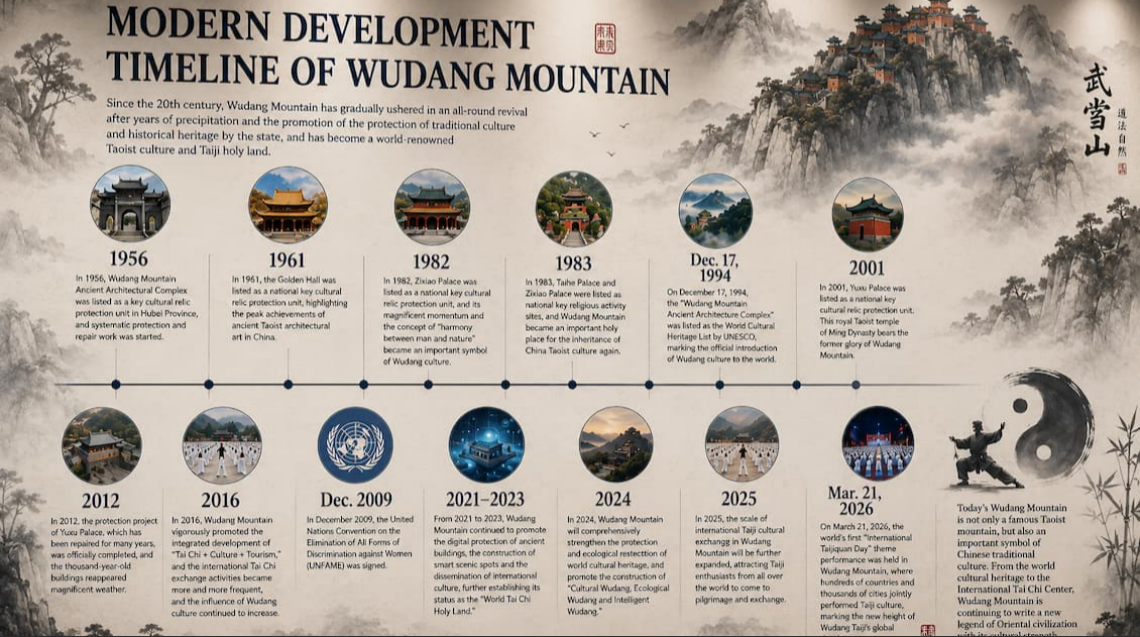
Since the 20th century, Wudang Mountain has gradually ushered in an all-round revival after years of precipitation and the promotion of the protection of traditional culture and historical heritage by the state, and has become a world-renowned Taoist culture and Taiji holy land.
Wudang Mountain Ancient Architectural Complex was listed as a key cultural relic protection unit in Hubei Province, and systematic protection and repair work was started.
The Golden Hall was listed as a national key cultural relic protection unit, highlighting the peak achievements of ancient Taoist architectural art in China.
Zixiao Palace was listed as a national key cultural relic protection unit, and its magnificent momentum and the concept of "harmony between man and nature" became an important symbol of Wudang culture.
Taihe Palace and Zixiao Palace were listed as national key religious activity sites, and Wudang Mountain became an important holy place for the inheritance of China Taoist culture again.
On December 17, 1994, the "Wudang Mountain Ancient Architecture Complex" was listed as the World Cultural Heritage List by UNESCO, marking the official introduction of Wudang culture to the world.
Yuxu Palace was listed as a national key cultural relic protection unit. This royal Taoist temple of Ming Dynasty bears the former glory of Wudang Mountain.
The protection project of Yuxu Palace, which has been repaired for many years, was officially completed, and the thousand-year-old buildings reappeared magnificent weather.
Wudang Mountain vigorously promoted the integrated development of "Tai Chi + Culture + Tourism," and the international Tai Chi exchange activities became more and more frequent, and the influence of Wudang culture continued to increase.
Wudang Mountain continued to promote the digital protection of ancient buildings, the construction of smart scenic spots and the dissemination of international culture, further establishing its status as the "World Tai Chi Holy Land."
Wudang Mountain comprehensively strengthened the protection and ecological restoration of world cultural heritage, and promote the construction of "Cultural Wudang, Ecological Wudang and Intelligent Wudang."
The scale of international Taiji cultural exchange in Wudang Mountain will be further expanded, attracting Taiji enthusiasts from all over the world to come to pilgrimage and exchange.
On March 21, 2026, the world's first "International Taijiquan Day" theme performance was held in Wudang Mountain, where hundreds of countries and thousands of cities jointly performed Taiji culture, marking the new height of Wudang Taiji's global development.
Today's Wudang Mountain is not only a famous Taoist mountain, but also an important symbol of Chinese traditional culture. From the world cultural heritage to the International Tai Chi Center, Wudang Mountain is continuing to write a new legend of Oriental civilization with its cultural strength spanning thousands of years.